
Tapo TC70
A practical security camera (1080p, no-subscription storage) for home security, with phone alerts and infrared night vision.
One of the first choices is how the camera gets its power and connection. 'Wireless' usually means battery-powered over Wi-Fi; 'wired' can mean a plug-in Wi-Fi camera or a fully wired PoE system. Each suits different homes.
Battery cameras connect over Wi-Fi and need no cabling, so you can fit them almost anywhere in minutes, which is their big appeal. The trade-off is recharging every few weeks or months, more often in cold weather. A solar panel largely solves this by topping up the battery in daylight. Wireless suits renters, awkward spots, and anyone who wants a quick DIY install.
A plug-in camera takes mains power but still uses Wi-Fi for video, so it never needs charging but must be near a socket. A PoE (Power over Ethernet) system runs a single cable for both power and data to each camera, giving the most reliable, always-on setup with local NVR storage, which is ideal for a permanent whole-home install, though it needs more effort to wire in.
For easy, flexible fitting and renting, go wireless (battery, ideally with solar). For a permanent, set-and-forget system with the most reliable recording and no charging, go wired or PoE. Many homes mix the two: PoE for key fixed points and battery cameras for the awkward spots.
A practical security camera (1080p, no-subscription storage) for home security, with phone alerts and infrared night vision.

A practical security camera (1080p, no-subscription storage) for home security, with phone alerts and colour night vision.

A practical security camera (2K, no-subscription storage) for home security, with phone alerts and infrared night vision.

A practical security camera (2K, no-subscription storage) for home security, with phone alerts and colour night vision.

A practical security camera (no-subscription storage) for home security, with phone alerts and infrared night vision.
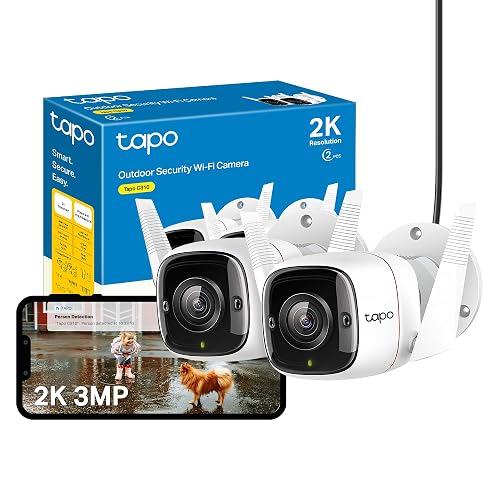
A practical security camera (2K, wired, no-subscription storage) for home security, with phone alerts and infrared night vision.
They depend on Wi-Fi signal at the mounting spot and on battery charge, so a strong signal and (ideally) solar power matter. Wired and PoE cameras are the most reliable because power and, for PoE, the connection are constant.
Power over Ethernet runs power and data down a single network cable to each camera. It gives a very reliable, always-on system with local NVR storage, at the cost of more involved cabling.
Our top pick is the Tapo TC70 (our score 9.6/10) - A practical security camera (1080p, no-subscription storage) for home security, with phone alerts and infrared night vision..