
Tapo TC70
A practical security camera (1080p, no-subscription storage) for home security, with phone alerts and infrared night vision.
Security cameras vary in the things that matter: image quality, how they're powered and placed, how footage is stored, and whether you'll pay a monthly fee. This guide walks through each so you can match a camera to your home.
Resolution is quoted in K or megapixels (2K is about 4MP, 4K about 8MP); 2K is the sensible standard and reads faces and plates well at normal distances, while 4K adds detail for large areas at the cost of storage and bandwidth. Night vision matters as much: infrared gives clear black-and-white footage in total darkness, while colour night vision needs some ambient or built-in light to work.
Indoor cameras are cheaper and fine for rooms and pets. Outdoor cameras need a weatherproof rating (look for IP65 or IP66). Power comes in three forms: battery/wire-free (easiest to fit, but needs recharging), solar (tops up the battery so you rarely recharge), and wired or PoE (constant power, no charging, but needs a socket or cabling). Match the power type to the spot.
This is where ongoing cost hides. Live view and motion alerts are normally free. Cloud recording and longer history usually need a paid plan, but cameras that record to a local microSD card or a base station/NVR let you avoid a subscription entirely. Decide up front whether you want local-only (no fees), cloud (off-site backup if the camera is stolen), or both.
Person or AI detection cuts the false alerts that plague basic motion sensors. Two-way audio lets you speak through the camera, and a siren or spotlight adds active deterrence. On privacy: a camera securing your own property is fine, but if it films beyond your boundary (a neighbour's garden, a shared path or the street), UK data-protection rules apply, so position it carefully and tell neighbours. This is general guidance, not legal advice.
A practical security camera (1080p, no-subscription storage) for home security, with phone alerts and infrared night vision.

A practical security camera (1080p, no-subscription storage) for home security, with phone alerts and colour night vision.

A practical security camera (2K, no-subscription storage) for home security, with phone alerts and infrared night vision.

A practical security camera (2K, no-subscription storage) for home security, with phone alerts and colour night vision.

A practical security camera (no-subscription storage) for home security, with phone alerts and infrared night vision.
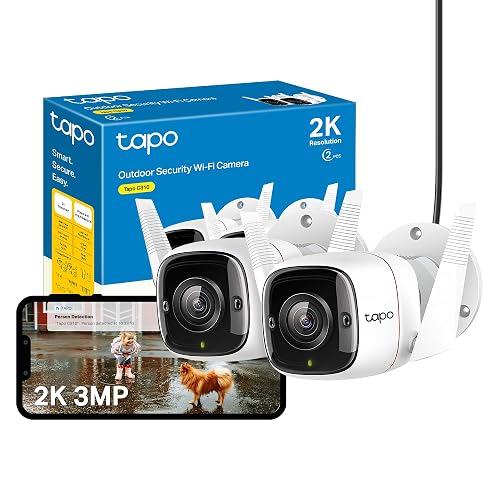
A practical security camera (2K, wired, no-subscription storage) for home security, with phone alerts and infrared night vision.
For most people it's the combination of reliable alerts, good night vision, and a storage option that avoids a subscription. Match power and weatherproofing to where the camera will go.
Capable 2K cameras start under £40. Spending more buys better smart detection, wire-free convenience, solar power, and stronger ecosystems.
Our top pick is the Tapo TC70 (our score 9.6/10) - A practical security camera (1080p, no-subscription storage) for home security, with phone alerts and infrared night vision..